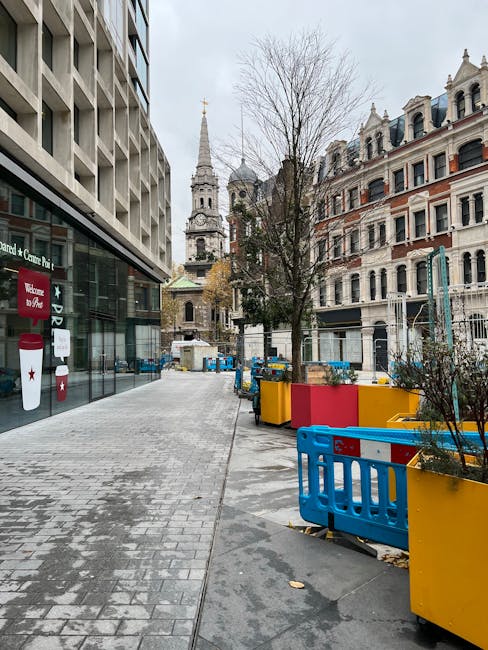
Charterhouse Square Delivery Tips for St Luke's Moves
Charterhouse Square can look deceptively simple on a map. In real life, though, a delivery there can involve tight turning space, shared access points, awkward parking, and the usual London curveballs that show up just when you think everything is under control. If you are planning a move or delivery with St Luke's Moves, a little local know-how goes a long way. The right preparation can save time, reduce stress, and help protect your furniture, your building, and your sanity. Truth be told, the difference between a smooth delivery and a messy one is often just a few good decisions made early.
This guide breaks down Charterhouse Square delivery tips for St Luke's Moves in practical, human terms. You will find out what matters most, how the process usually works, where problems tend to appear, and what to do before the van arrives. There are also links to useful service pages and moving guides if you want to plan the job properly rather than wing it on the day.
Why Charterhouse Square Delivery Tips for St Luke's Moves Matters
Charterhouse Square sits in a busy part of central London where delivery planning is rarely just about "turn up and unload." The roads can be narrow, the footfall can be high, and nearby properties often have their own access rules. If you arrive without a clear plan, even a modest delivery can drag on far longer than expected. That usually means more cost, more stress, and more chance of damaging something that would have been fine with a bit more thought.
For St Luke's Moves customers, the value of local delivery tips is simple: they help you prepare for the real conditions on the ground. A cleaner route, better packing, a sensible arrival time, and a team that understands the practicalities of London access can make a real difference. If you are moving home, shifting office equipment, or delivering a few awkward pieces of furniture, the basics still matter. The van needs space, the building may have restrictions, and someone needs to manage the handover properly.
There is also a trust angle here. Good delivery planning shows respect for your belongings and for the people sharing the space around Charterhouse Square. Nobody wants boxes stacked in the way of pedestrians, a sofa blocking the pavement, or a rushed lift through a narrow doorway. A well-run move looks calm from the outside, even if there is a lot going on behind the scenes.
For broader planning, many readers also find it useful to look at how to make a house transition feel less chaotic and how to declutter before relocating. Those two steps alone often reduce the delivery load more than people expect.
How Charterhouse Square Delivery Tips for St Luke's Moves Works
At a practical level, this kind of delivery plan works by matching the job to the location. That sounds obvious, but people miss it all the time. A small flat move, a student relocation, a furniture drop-off, and an office delivery all have different access needs. Charterhouse Square adds another layer because central London buildings often have limited parking, timed access, or shared entrances that need careful coordination.
The process usually starts with a quick assessment of the items and the destination. How big are the pieces? Are there stairs or a lift? Is there loading access nearby? Will the van need to wait, or can it park close enough to keep carrying distance short? These questions shape everything else. In many cases, a man and van service in St Luke's is the simplest solution because it keeps the job flexible without overcomplicating the move.
Next comes packing and protection. Soft furnishings, mirrors, TVs, and fragile items need different handling from standard boxes. If you are moving a mattress, a sofa, or a dining table, the way it is wrapped and loaded matters just as much as the route. You may want to read expert advice on shifting your mattress and bed and tips for sofa storage and longevity if those items are part of your plan.
Then there is timing. Delivery windows matter in central London, especially if the property has concierge rules, office reception hours, or busy traffic periods. A small delay can snowball if the loading bay becomes unavailable or the building manager is waiting for a specific arrival slot. That is why a good plan includes a little buffer, not just a perfect schedule on paper. Paper schedules are lovely. Reality, not always.
Key Benefits and Practical Advantages
The right delivery plan does more than reduce hassle. It improves the whole quality of the move.
- Less physical strain: Good planning reduces unnecessary carrying, awkward turns, and repeated lifting.
- Lower damage risk: Proper packing and smarter loading protect furniture, flooring, and door frames.
- Faster turnaround: Clear access and a well-packed van shorten the unloading process.
- Better coordination: A clear plan helps everyone know when and where to be.
- Fewer surprises: You are less likely to discover access issues after the van has already arrived.
There is also a quieter benefit: peace of mind. When the practical details are sorted, you can focus on what actually matters on the day, like checking items off, greeting the driver, and making sure the keys, codes, or contact details are all to hand. That calm feeling is worth a lot, especially if you have already spent a week living among half-packed boxes and one mysteriously missing charger.
If you need help with the heavier or trickier items, the relevant service can make life much easier. For example, furniture removals in St Luke's can be a good fit for bulky household pieces, while storage options in St Luke's may help if your move-in and move-out dates do not line up neatly.
Who This Is For and When It Makes Sense
This guide is useful for anyone delivering into or out of Charterhouse Square, but it is especially relevant in a few common situations:
- People moving into a flat with shared access or limited lift space
- Students needing a practical, low-fuss moving setup
- Office teams relocating documents, desks, or IT equipment
- Homeowners arranging furniture delivery or collection
- Anyone with large, fragile, or time-sensitive items
It also makes sense if you are trying to do too much yourself. That is a very human mistake. We all look at a van-sized task and think, "It should be fine." Then the sofa catches the doorway, the clock starts moving faster, and someone ends up carrying a lamp like it is a family heirloom. If that sounds familiar, a managed delivery approach is probably the smarter move.
For smaller, fast-turnaround jobs, a same-day removals service in St Luke's may be suitable. For more structured home moves, house removals or flat removals are usually more appropriate. The point is not to choose the biggest option; it is to choose the right one.
Step-by-Step Guidance
Below is a practical process you can follow for a smoother Charterhouse Square delivery. It is deliberately simple, because overcomplicated moving advice tends to fall apart when the van arrives.
- Check access first. Look at entrance width, stair access, lift size, and any loading restrictions near the square.
- Measure the awkward items. Sofas, beds, desks, and wardrobes are usually where problems start.
- Pack for movement, not just storage. Use sturdy boxes, secure wrapping, and labels that actually help on the day.
- Separate the essentials. Keep keys, documents, chargers, medication, and one basic toolkit with you.
- Confirm timing with the building or recipient. A ten-minute call can prevent a long delay later.
- Protect the route. If you are moving items through communal hallways, think about floors, corners, and door handles.
- Load in the right order. Heavier or more stable items usually go in first, with fragile pieces secured properly.
- Do a final walk-through. Check cupboards, loft spaces, under beds, behind doors, and inside chargers drawers. Yes, really.
If you want a stronger packing process, this guide pairs well with practical packing hacks for less stressful moves and proven methods to clean before leaving. Cleaning and packing sound dull, but they save time later. They just do.
Expert Tips for Better Results
A few details can dramatically improve delivery day in Charterhouse Square. These are the small things that experienced movers tend to notice early.
Plan around the building, not just the postcode
Two properties in the same square can have very different access. One may have a lift and a loading area; another may mean stairs, a narrow lobby, and a busy reception. Always plan based on the actual entrance you will use.
Use soft protection for tight interior spaces
Blankets, covers, and corner protection are not optional extras when a hallway is narrow or freshly decorated. A tiny scuff on a wall becomes very noticeable very quickly.
Label by room and priority
Instead of "miscellaneous," use labels like "kitchen - first use" or "bedroom - bedding." That makes unpacking cleaner and speeds up the handover process. A bit boring perhaps, but it works.
Keep bulky item moves separate if needed
If you are moving a piano, a large sofa, or a very heavy wardrobe, treat it as its own mini-project. A specialist approach is usually safer. For pianos in particular, see why moving a piano alone is risky and consider piano removals in St Luke's instead.
Leave a breathing space in the van
Oddly shaped items need room to sit securely. If the van is packed too tightly, items can shift and rub. A little space, arranged properly, is far better than forcing one more box into the gap.
One more practical point: if your move involves heavier lifting, brush up on safer lifting technique principles and solo heavy-lifting tips. Not glamorous reading, but helpful when your back says thank you afterwards.
Common Mistakes to Avoid
Most moving headaches are predictable. The trouble is, they still catch people out because the day feels busy and everything starts happening at once.
- Assuming parking will be easy. Central London rarely rewards assumptions.
- Underestimating item size. A sofa that looks fine in the living room can become a nightmare in the stairwell.
- Poor box labelling. If you cannot tell what is fragile, urgent, or heavy, nobody else can either.
- Leaving access checks too late. It is much easier to solve a restriction the day before than on arrival.
- Overfilling boxes. Heavy boxes are awkward to carry and more likely to split.
- Ignoring weather and timing. Rain, traffic, and school-run congestion all affect a London delivery.
There is also the "just one more thing" problem. Someone finds an extra chair, then another bag, then a printer, then a box of plates. Suddenly the van plan no longer fits the actual load. A quick inventory avoids that. A real inventory, not the half-memory version we all accidentally rely on.
Tools, Resources and Recommendations
You do not need a van full of specialist equipment for every move, but a few basic tools make delivery day far more manageable.
- Strong boxes: Use good-quality packing boxes for books, crockery, and household items.
- Packing tape and markers: A simple but essential combination.
- Furniture blankets: Useful for preventing knocks and surface marks.
- Straps or ties: Helpful for securing items in transit.
- Protective wrap: Ideal for fragile or oddly shaped pieces.
- Floor protection: Particularly useful in shared entrances or tight hallways.
If you want to reduce stress before the move, the packing and boxes service in St Luke's can help you gather the right materials without overbuying. It is also worth reviewing the full services overview if you are deciding between a simple man-and-van booking and a more complete removal solution.
For people who are comparing providers, removal services in St Luke's and removal companies in St Luke's are useful pages to review alongside pricing and quotes. That way you can understand both the service level and the likely cost structure before making a decision.
Law, Compliance, Standards, or Best Practice
For most domestic and small business deliveries, the key point is not complicated legal theory. It is about operating safely, responsibly, and within the building or street rules that apply to the location. In central London that usually means respecting loading restrictions, avoiding obstruction, and making sure access is arranged properly with the property or client.
Best practice also includes appropriate lifting methods, sensible loading, and good communication. If a move involves stairs, large items, or narrow access, the job should be planned with safety in mind rather than speed alone. That is especially important where repeated lifting, awkward turning, or fragile equipment is involved. The safer route is usually the smarter route.
For reassurance, you may also want to review the company's health and safety policy, along with its insurance and safety information. If you are concerned about how your data or booking details are handled, the privacy policy and terms and conditions are worth a look too. Not exciting, admittedly, but sensible.
And if you are just browsing before booking, the about us page can help you understand who you are dealing with. That trust layer matters, especially when you are letting someone into your home or office on moving day.
Options, Methods, or Comparison Table
There is no single best method for every Charterhouse Square delivery. The right choice depends on what you are moving, how quickly you need it done, and how much access you have.
| Option | Best for | Strengths | Limitations |
|---|---|---|---|
| Man and van | Small to medium deliveries, flexible jobs | Quick, practical, adaptable to central London access | May not suit large, specialist, or multi-team moves |
| Full house removals | Whole-home moves with more furniture | Better coordination, more support for bulky items | Can be more than you need for a simple delivery |
| Flat removals | Apartments with stairs, lifts, or shared entrances | Suited to tighter access and urban layouts | Needs accurate details in advance |
| Furniture-only delivery | Single items or grouped furniture pieces | Cost-effective for targeted moves | Does not cover full packing or full-home logistics |
| Storage-first approach | Moves with date gaps or temporary holding needs | Good for flexible timing and staged relocation | Requires extra planning and handover coordination |
If the job is urgent, a removal van in St Luke's may be enough. If the move is larger or more complex, house removals or office removals could be the better fit. The best option is the one that matches the real workload, not the one with the fanciest name.
Case Study or Real-World Example
Imagine a small flat move into an upper-floor apartment near Charterhouse Square on a weekday morning. The client has a bed frame, a mattress, two bookcases, a desk, boxed kitchenware, and a couple of fragile lamps. On paper, it sounds straightforward. In practice, the access is tighter than expected and the lift is shared with another resident.
The smoothest version of this move starts the day before. The client measures the bed frame and bookcases, confirms the lift dimensions, and checks the building's preferred delivery window. Boxes are labelled by room, fragile items are wrapped separately, and the mattress is protected properly. The van arrives with enough room to keep the larger furniture stable, and the unload is done in a sensible sequence: bed frame first, then the bulkiest boxes, then the delicate pieces.
The result? Less back-and-forth, fewer bumps, and no awkward scramble at the front door. Nothing dramatic. Just the sort of calm, organised move that makes everyone breathe easier. That is really the goal. Not perfection, just a day that feels manageable.
For a similar setup, readers often combine planning with student removals support if the move is compact and budget-aware, or with furniture removals when the job is mostly about larger household pieces.
Practical Checklist
Use this checklist the day before your delivery or move. It is simple, but it catches most of the avoidable issues.
- Confirm the address, postcode, and access point
- Check if there is a lift, and whether it is available during your slot
- Measure large items and key doorways
- Reserve or confirm loading arrangements where needed
- Pack fragile items separately and label them clearly
- Keep essentials and valuables with you
- Protect floors, corners, and furniture surfaces
- Tell the building contact or recipient your ETA
- Plan for traffic delays, especially in central London
- Do a final room-by-room sweep before leaving
Expert summary: if you want a reliable Charterhouse Square delivery, focus on three things first: access, packing, and timing. Get those right and the rest usually becomes much easier. Ignore them, and even a small job can turn into an afternoon of avoidable frustration.
Conclusion
Charterhouse Square delivery planning is really about respect: respect for the building, the items being moved, the people helping, and your own time. A smooth delivery rarely happens by accident. It usually comes from a few thoughtful decisions made in advance, plus a realistic sense of what the location can and cannot handle.
If you are booking with St Luke's Moves, the best approach is to match the service to the job, prepare the items properly, and keep communication clear from start to finish. That is how you reduce stress, avoid damage, and make the whole thing feel far more manageable. Not glamorous, perhaps. But effective, and that counts for a lot.
Get a free quote today and see how much you can save.
When the van pulls away and the last box is safely inside, the relief is real. And honestly, that quiet moment after a well-run move is worth planning for.
Frequently Asked Questions
What are the most important Charterhouse Square delivery tips for St Luke's Moves?
The main tips are to check access carefully, measure large items, pack securely, and confirm timing with the building or recipient. In central London, those four things solve most problems before they start.
Do I need a man and van service for Charterhouse Square?
Not always, but it is often a sensible choice for smaller or medium-sized deliveries. It gives you flexibility without the complexity of a larger removal setup.
How far in advance should I plan a delivery in Charterhouse Square?
As early as possible, especially if the building has restrictions or the delivery involves bulky items. Even a day or two of lead time can make a noticeable difference.
Can St Luke's Moves help with furniture only, not a full house move?
Yes, furniture-only jobs are often a very good fit. If the move is mainly about sofas, beds, tables, or wardrobes, furniture removals may be the most efficient option.
What should I do if my delivery includes a mattress or bed frame?
Wrap and protect each piece properly, check the dimensions against access points, and keep the route clear. For more detail, the guide on moving beds and mattresses is a useful read.
Is same-day delivery possible in this area?
Sometimes, yes. It depends on timing, availability, and the size of the job. If it is urgent, a same-day removals service can be worth asking about.
What if there is no easy parking near Charterhouse Square?
That is common in central London. The best approach is to plan loading and unloading carefully, allow extra time, and confirm the nearest practical stopping point in advance.
Are there special risks with large or fragile items?
Yes. Bulky items can strain doorways and stairwells, while fragile items need better wrapping and more careful handling. Pianos, glass, mirrors, and antique furniture deserve extra caution.
Should I use storage if my move dates do not line up?
If there is a gap between leaving one property and entering the next, storage can be a very practical solution. It keeps the move flexible and reduces pressure on the delivery day.
How can I reduce the chance of damage during a delivery?
Use strong boxes, proper wrapping, protective blankets, and a sensible loading plan. Also, make sure the route inside the property is clear before anything starts moving.
What documents or details should I have ready on the day?
Keep the address, contact number, access instructions, any booking reference, and building arrival guidance close by. It sounds obvious, but people are always hunting for a note right when they need it.
How do I know whether I need flat removals or house removals?
If you are moving from an apartment with shared access, stairs, or a lift, flat removals are often the better match. A full house move usually suits larger, more layered relocations.
Where can I learn more about St Luke's Moves and related services?
A good place to start is the removals in St Luke's page, alongside the services overview and the company's support pages, such as insurance and safety information.