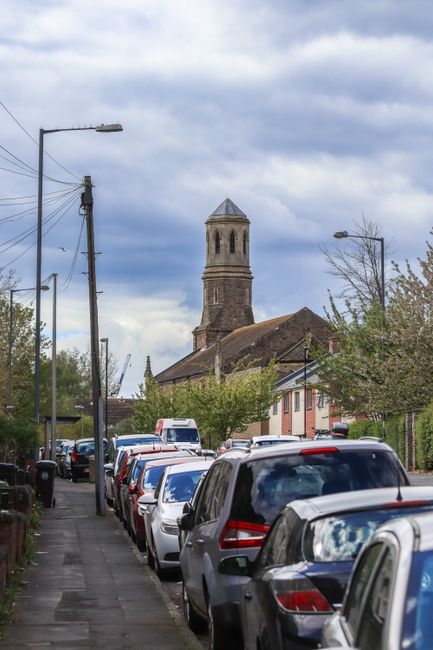
Do I Need a Permit to Load Outside St Luke's Church?

If you are planning a move, a delivery, or even a quick furniture collection, the question "Do I Need a Permit to Load Outside St Luke's Church?" can save you a lot of stress. In a busy part of London, loading space is often tighter than people expect, and the rules around stopping, waiting, or unloading are not always obvious at first glance. The short answer is: sometimes yes, sometimes no - it depends on the exact location, the type of vehicle, how long you need, and whether any parking or loading restrictions apply at that moment.
This guide breaks it all down in plain English. You will learn what the permit issue usually involves, how loading generally works near St Luke's Church, what can go wrong if you ignore the rules, and the sensible steps to take before moving day. We will also cover practical checklists, local-style planning tips, and a few things people often forget until they are already standing beside a van with a sofa half-out the door. Not ideal, to be fair.
Why Do I Need a Permit to Load Outside St Luke's Church? Matters
Loading on a London street is not just about where the van can physically fit. It is about whether the stop is permitted, whether you are blocking traffic, whether you are in a bay that requires a pay-and-display ticket or a loading exemption, and whether the authority responsible for the road expects advance permission. Around St Luke's Church, you can often get a feel for the complexity just by looking at the road: narrow carriageway, active footfall, occasional busier periods, and very little room for improvising.
People ask this question because the consequences of getting it wrong are annoying in the best case and expensive in the worst. A vehicle may be moved on, a loading job may take twice as long, and in some cases you may end up with a penalty or a complaint from nearby businesses or residents. More practically, you risk losing momentum on move day. Once the team has started carrying boxes, you want that flow to stay steady. One unnecessary delay can throw the whole morning off.
There is another reason it matters: planning. If you know in advance whether a permit, dispensation, or specific loading arrangement is needed, you can choose the right vehicle, book the right time slot, and avoid that awkward moment where everyone is staring at the curb wondering whether the hazard lights are enough. They usually are not. At least, not on their own.
How Do I Need a Permit to Load Outside St Luke's Church? Works
The wording may sound a bit odd, but the practical question is simple: is your van allowed to stop there for loading, and for how long? In London, loading and unloading are often allowed in some places without a full parking permit, but only if the stop is genuinely for loading, done continuously where possible, and not prohibited by local signs or road markings. In other places, you may need advance permission, a parking dispensation, or some form of temporary arrangement.
Here is the part many people miss: there is no single universal rule for every street near St Luke's Church. A short loading stop on one side of the road may be fine, while a different side street may have restrictions that make the exact same action non-compliant. So the answer depends on the road, the bay type, the time of day, and whether the vehicle is standing still purely for loading rather than parking casually.
In normal moving-day terms, the process usually goes like this:
- You check the street conditions, signs, and bay restrictions near the property.
- You work out whether the van can stop safely and legally for the loading window you need.
- If a permit, dispensation, or special booking is required, you arrange it before moving day.
- You keep loading continuous and organised, so the stop is clearly for a genuine moving purpose.
- You move off as soon as the loading is complete.
A good mover will treat this as a planning issue, not an afterthought. In our experience, that is where most of the time savings come from. Not magic. Just preparation.
Key Benefits and Practical Advantages
Getting the loading plan right brings a few very real benefits, and they are not all obvious at first.
- Less risk of delays: You are not hunting for a space at the last minute.
- Safer lifting: If the van is positioned close enough, there is less carrying distance and less strain.
- Better protection for items: Fewer handovers across pavement edges or across awkward kerbs means fewer bumps.
- Lower stress: Everyone knows where the vehicle is going to sit, so the move feels controlled.
- Cleaner neighbour relations: A tidy, time-limited loading plan is much easier for passers-by to accept.
There is also a commercial benefit if you are using professional movers. A clear loading setup helps them estimate timing more accurately. That means better scheduling, fewer surprises, and a more realistic plan for awkward items like beds, wardrobes, or a piano. If you want to understand how pricing and timing are often affected by access, it is worth reading understanding man and van quotes for St Luke's moves. It gives useful context before you start comparing options.
Who This Is For and When It Makes Sense
This question matters for more people than you might think. It is not only for full house moves. A permit or loading arrangement can be relevant if you are:
- moving out of a flat near St Luke's Church
- delivering bulky furniture to a home or office
- collecting storage items from a property
- moving a student room on a tight schedule
- handling same-day removals with limited notice
- bringing in specialist items like a piano or large sofa
It is especially worth checking if the road is narrow, the pavements are busy, or the property is near a junction, church frontage, or heavily used pedestrian area. That is where van positioning becomes a proper issue, not just a convenience. If your move involves a flat, upper-floor access, or awkward staircases, you may also want to read narrow lifts and staircase-safe moving advice because access challenges often go hand in hand with loading problems.
On the other hand, if you are carrying a couple of boxes by hand from a nearby address and the vehicle is only stopping briefly in a clearly permitted loading area, you may not need anything beyond careful observance of the local signs. That said, the line between "brief loading" and "illegal stop" can be thinner than people expect. A bit annoying, but there it is.
Step-by-Step Guidance
If you want to avoid drama on the day, follow a simple process. It does not have to be complicated.
1. Check the exact loading point
Do not assume the church location itself gives you a blanket rule. Look at the specific side of the road or adjacent street where the van will stop. Loading on one stretch may be manageable, while another stretch is restricted.
2. Look for signs and bay markings
Read the signs properly. I know, not glamorous. But they tell you whether loading is allowed, for how long, and whether there are time limits. Bay markings can also indicate resident parking, pay-and-display, or loading-only conditions.
3. Match the vehicle to the space
A small van and a long-wheelbase van do not need the same amount of room. If the street is tight, choose a vehicle that suits the access rather than forcing a larger one in and hoping for the best.
4. Build a realistic loading window
If the job involves furniture, stairs, or fragile items, give yourself more time than you think you need. People often plan for the first five boxes and forget the heavy bits come later. Funny how that happens.
5. Keep the load active and organised
Loading should look and feel like loading. Keep items moving steadily, avoid long breaks, and stage boxes near the exit before the van arrives. If you need help with packing strategy, these packing hacks for a smoother move are useful for getting the sequence right.
6. Have a backup plan
If the preferred loading spot is taken or restricted, know your next best option before you arrive. A nearby side street or alternative waiting point can save the day.
Expert Tips for Better Results
There are a few small habits that make a large difference.
- Book your loading window early in the day if possible. London streets tend to get busier as the morning goes on.
- Use one person as a point of coordination. Too many people giving directions at once can slow everything down.
- Pack the van in reverse order. Items you need first at the destination should be loaded last.
- Protect awkward items before the van arrives. Wrapping a mattress or sofa while standing at the kerb is never fun.
- Keep stairwells and entrances clear. This helps both access and safety.
For heavy or bulky furniture, it is worth reviewing guidance on safe handling before you lift anything too ambitious. A quick look at heavy lifting techniques for efficient moves can help you avoid unnecessary strain. And if you are moving a bed, take a moment to read expert advice on shifting your mattress and bed with ease. Mattresses look harmless until you are turning one on a staircase landing.
Another practical tip: keep a small kit ready in the front of the van. Tape, gloves, scissors, a torch, and a couple of bungee straps are not exciting, but they make the loading process much smoother. You will notice the difference at 8:15 in the morning, when everyone is half awake and the coffee has not kicked in yet.
Common Mistakes to Avoid
Most loading problems are avoidable. That is the frustrating part.
- Assuming a stop is automatically allowed because it is "just for a minute." Short stops can still breach restrictions.
- Ignoring nearby restrictions because the vehicle is small. Size does not cancel parking rules.
- Not checking access before the moving team arrives. This causes awkward backtracking and wasted time.
- Leaving fragile goods loose in the vehicle. A sharp stop can turn a tidy move into a messy one.
- Underestimating how long loading will take. The last 10% of a move often takes 40% of the effort.
One especially common mistake is assuming the ground-level access tells the full story. It does not. If the route from the property to the van involves tight corridors or awkward building layouts, the loading plan may need to change. That is why local planning advice matters, including articles such as moving out tips for Old Street flats near St Luke's and Charterhouse Square delivery tips for St Luke's moves. The streets around here have their own little personality, let's say that politely.
Tools, Resources and Recommendations
You do not need a truck full of fancy kit. You need the right basics and a sensible plan.
| Tool or resource | Why it helps | Best used for |
|---|---|---|
| Loading trolley | Reduces repeated lifting and shortens carry time | Boxes, small appliances, heavy parcels |
| Blankets and wraps | Protects furniture during short kerbside loading | Sofas, tables, wardrobes |
| Straps and bungees | Keeps items secure in transit | Mixed loads, stacked items |
| Printed room labels | Makes unloading much faster at the destination | Full-house and flat moves |
| Access notes | Helps everyone understand the loading point and timing | Any move near restricted streets |
For broader planning, it can help to read about the full moving process rather than focusing only on the street stop. This guide to a seamless house transition is a solid companion if you are trying to link access, packing, and final handover into one tidy plan. And if storage is part of the move, storage in St Luke's may be useful in the bigger picture, especially when timing is awkward.
Law, Compliance, Standards, or Best Practice
For loading outside a church, the practical compliance issue usually comes down to road restrictions, local parking controls, and whether the stop is genuinely a loading activity rather than ordinary parking. In the UK, that means you should always treat signs, bay markings, and any local conditions as the deciding factor. If you are unsure, it is safer to assume you need permission or an alternative arrangement rather than risk a last-minute problem.
Best practice in this context is straightforward:
- check the exact road section in advance
- keep the stop as short as the work reasonably allows
- make sure the loading activity is continuous and obvious
- avoid blocking visibility, crossings, or access points
- plan for pedestrians, cyclists, and local traffic flow
If your move involves a commercial vehicle, business delivery, or repeated loading activity, compliance becomes even more important. You want the operation to look professional, calm, and responsible. That also links closely with vehicle insurance and operating practice. If you are comparing providers, insurance and safety information is worth reviewing alongside the moving plan. It is not exciting reading, granted, but it is the kind of detail that prevents expensive surprises later.
And just to be clear: if a road sign indicates no stopping, no loading, or a time-specific restriction, do not assume loading automatically overrides it. In some places it may not. Better to pause and verify than to improvise. That is the honest answer.
Options, Methods, or Comparison Table
If you are deciding how to handle loading outside St Luke's Church, these are the usual options.
| Approach | When it suits you | Pros | Cons |
|---|---|---|---|
| Short kerbside loading without extra permission | Simple jobs in permitted loading areas | Quick, convenient, low admin | Only works where signs allow it |
| Loading permit or dispensation | Heavier moves or stricter streets | Greater certainty, less disruption | Needs planning and possibly advance notice |
| Alternative loading point nearby | Where the church frontage or main road is too restricted | Safer for compliance, often easier on traffic flow | Longer carry distance |
| Timed same-day move | When access windows are limited | Efficient if coordinated well | Less room for delay if timing slips |
For many local moves, the best answer is a mix of methods: use the nearest permitted stop, keep the move compact, and choose a time when the street is calmer. If the job is larger, specialist help can make the difference. A man and van in St Luke's or a broader removal services option in St Luke's may be better than trying to do everything yourself.
Case Study or Real-World Example
Here is a realistic scenario. A small flat move was planned from a property a short walk from St Luke's Church. The client assumed the van could stop directly outside for half an hour because the road looked quiet early in the morning. On arrival, the team found bay restrictions and a very limited stopping window. Nothing dramatic happened, but the loading had to be reworked on the spot. That meant a longer carry from a nearby legal space, a slower pace for the first few items, and a mildly frazzled start.
By contrast, when the same type of move is planned properly, the process is usually calm. Access notes are checked the day before, the vehicle size matches the street, and the items are staged in order. The van arrives, the loading point is clear, and the job moves forward without guesswork. It is a much nicer rhythm. Less chatter, less lifting twice, fewer "shall we try here instead?" moments.
In one of the smoother moves we would expect in this area, a client who had already used decluttering advice before relocating finished the move faster than expected simply because the load was smaller and better organised. That is the hidden win people often miss: a permit question is rarely just a permit question. It is part of the whole moving chain.
Practical Checklist
Use this before the van arrives. Honestly, it will save you a headache or two.
- Confirm the exact loading spot near St Luke's Church
- Read every sign and bay marking carefully
- Check whether the stop is for loading only and for how long
- Decide if you need a permit, dispensation, or alternate space
- Match the van size to the street and property access
- Stage boxes and furniture close to the exit
- Wrap fragile or bulky items in advance
- Keep paths, stairwells, and doorways clear
- Assign one person to coordinate the loading flow
- Have a backup plan if the preferred space is occupied
- Bring tape, straps, gloves, and basic tools
- Double-check timings if you are doing a same-day move
For bigger jobs, it also helps to plan the packing side properly. Packing and boxes in St Luke's can support the loading plan, while the best times to book a man and van in St Luke's EC1V can help you choose a calmer slot. Timing matters more than people think. Usually more than people like.
Conclusion
So, do you need a permit to load outside St Luke's Church? Possibly - and in many situations, it is smarter to assume some form of parking control or loading rule applies until you have checked the exact spot. The real answer depends on the street, the markings, the time, and how long the van needs to stay put. If you treat it as a planning question instead of a guess, you will avoid most of the stress.
The best moving days near busy London landmarks are usually the ones where the logistics are boring in the nicest possible way. The van fits. The route is clear. The loading is continuous. Nobody is pacing up and down the pavement wondering if they have made a mistake. And that, really, is the goal.
If you are preparing for a move, delivery, or bulky item collection near St Luke's Church, careful access planning will give you a calmer start and a smoother finish. A little checking now can save a lot of faff later, and that is a trade worth making.
Get a free quote today and see how much you can save.
Frequently Asked Questions
Do I always need a permit to load outside St Luke's Church?
Not always. It depends on the specific road restrictions, the parking bay type, and whether the stop is allowed for loading at that time. Some loading may be permitted without a special permit, while other situations need advance permission.
Can I just stop for a few minutes if I am loading a sofa or boxes?
Sometimes, but not automatically. A short stop can still break the rules if the signage or bay restrictions do not allow it. Always check the exact location before assuming a few minutes will be fine.
What counts as genuine loading?
Genuine loading means you are actively moving goods between the property and the vehicle. It should be continuous and directly connected to the move or delivery, rather than leaving the van stationary while you do something else.
What if the loading space is already taken?
Have a backup point in mind. Nearby side streets or alternative legal stopping places may be better than waiting awkwardly in a restricted area. Planning a second option saves time and stress.
Does a small van need the same permit as a large van?
Not necessarily, but the rules still apply. A smaller van may fit better and create fewer access issues, yet it still has to obey the same road controls. Size helps with access, not with legal exemptions.
Should I check access before moving day?
Yes, absolutely. A quick check of the road, the signs, and the building access can prevent delays later. It is one of those small jobs that makes the whole move feel much more under control.
Is it better to move early in the morning near St Luke's Church?
Often, yes. Early starts can mean lighter traffic and easier loading conditions. That said, you still need to respect the local restrictions and any time-specific rules on the street.
What happens if I ignore the loading rules?
You may be asked to move the vehicle, face a penalty, or cause delays to the move itself. It is also stressful for the team and awkward for neighbours or nearby businesses. Best avoided.
Can a removal company help with loading access planning?
Yes. A good local mover will usually understand the practical side of access, van positioning, and timing. They may also help you choose the right vehicle and loading approach for the street.
How far in advance should I sort out loading permission?
As early as you can, especially for larger moves or time-sensitive bookings. If the street is busy or the job is complicated, last-minute planning can leave you with very few options.
Is a loading permit the same as a parking permit?
No. They are different in practice. A permit or dispensation for loading is about allowing a temporary stop for moving goods, while a parking permit is usually about longer-term or resident-style parking arrangements.
What is the smartest thing to do if I am unsure?
Check the exact location, read the signage, and if needed, arrange an alternative loading plan. When in doubt, it is safer to be cautious than to make a rushed assumption. That is usually the difference between a smooth move and a messy one.